Wednesday, January 20, 2010

the brooklyn kitchen

the brooklyn kitchen spawned from amateur cooks who were frustrated with the lack of cooking supplies available in their brooklyn neighborhood. that's when taylor erkkinen and harry rosenblum took what seemed like a good idea and opened their store, which was five years ago. crain's new york business wrote about them just a couple of months ago.


(courtesy of their site, the shop before construction)

i love this. first off, i'm envious at the very idea behind what they've done. they had a passion, saw a need that was in turn impeding that passion, and took the risk to assume that others felt the same and... made a business out of it.


(and how it looks today)

there's something to learn for all of us in this story, which crain's was wise enough to recognize as well. for me, this brings to light the subtext of every thing i've written on this blog. it's like saying, wake up, everybody. at what point was ingenuity and creativity replaced by mass-produced goods and foods. where did the home cooked meal disappear to? why, one hundred years ago, did over 40% of this country's workers classify themselves within the agricultural sector, and we now face a number that is less than 2%? how did agriculture become a multi-billion dollar venture for global corporations to control, pulling the carpet from beneath the country's small farmers?

the brooklyn kitchen is a prime example of how people, whether they're conscious of it or not, are in fact willing to engage this ongoing dialogue and exorcise the far more sufficient and sustainable ways and means of agriculture and distribution that began to disppear just fifty years ago.


(my papa, carving our christmas dinner pork shank)

harry rosenblum is the son of a friend of my grandfather, and yesterday it was my grandfather's birthday. this artcile was sent to me by him. i'd give anything to have sat at the dinner table with my grandfather when he was a boy. what did my g.g. cook for him back then? where did she shop? and how far did the foods she brought home travel before they wound up in her hands? have you ever even thought of how different food might have looked then? that's something i never even thought to ask my grandfather, but so easily could. all of these questions are.

as i often say, maybe i'm just a nostalgic idealist. maybe there's little to the cause and in truth, people are more obsessed with a place like the brooklyn kitchen because we as a people are eating more food than we've ever eaten before. but then why did the brooklyn kitchen just recently opened the brooklyn kitchen labs, as crain's highlights, where cooking classes are offered and filled constantly? people are finding their way back to the kitchen, and the bar has been raised when it comes to what they want to learn and who they want to learn it from. but is this a small movement, or the start of something far larger?


(the newly opened brooklyn kitchen labs and meat hook)

and how much do i wish they'd opened shop in chicago and not brooklyn?

happy birthday, papa. thanks for this.

Wednesday, January 13, 2010

what should i eat?


the man behind two of the loudest books of the past few years, and whose name appears in this blog maybe more than any other, managed to release a book this past holiday season without creating much of a stir. yes, that man. michael pollan.

food rules: an eater's manual is very simple in its premise. it's an attempt, in sixty-four rules, to help you answer the question that's constantly asked every day by all of us, "what should i eat?" only this time, the answer doesn't come down to a sandwich from subway or a buritto from chipotle, but rather an actual answer to the question: what should you eat.

and so, some rules:

18.
don't ingest foods made
in places where everyone
is required to wear a
surgical cap.

19.
if it came from a plant,
eat it; if it was made in
a plant, don't.

20.
it's not food if it arrived
through the window
of your car.

21.
it's not food if it's called
by the same name in
every language.
(think big mac,
cheetos, or pringles.)

Tuesday, January 12, 2010

restaurants, and the social media frontier

perhaps this falls on deaf ears, but my conscience has been tugging at the lack of new content on the blog, when the reason for that lack of posting really amounts to content itself. so here goes:


i've been pretty quiet about this, and there's nothing too crazy about it really, but i'm in the position to start my own business here in chicago. it started with stephanie giving me the opportunity to work for her, in a position she calls her media coordinator, which two months ago afforded me the chance to meet the right people at the right time. i've since started working in a similar capacity for the hearty boys, who, for those in the food network know, won the first season of "the next food network star" and went on to run "party line with the hearty boys" for three seasons. they're operation is impresive, pushing out some of the best catering services in the midwest, as well as a brand new restaurant that opened this past fall from their boystown hub, hearty. not long after i started work for the boys, a friend referred me to another chicago mainstay, bin 36. the bin brand is unique in that they operate three restaurants in chicago—from which they've been nominated for outstanding wine service by the james beard awards—but also push their own wine in the national market that's produced in partnership with hahn estates. the driving force behind the operation is a three-man partnership who divide their expertise and presence between food, wine, and management. point being, i'm planning some unique work with some pretty cool people.


it's an interesting place where i find myself, filling the needs of restaurants by offering a service traditional public relation firms are somehow not able, or wanting, to fill. tonight i'm heading to an event with the head of an up-and-coming distillery who's thinking i might fill his needs, too, which has really got me thinking. i don't see why once i get this up and running, i shouldn't make something out of it. there's a need, no doubt, and right now there are few in the position to make it happen.


and yet, there's no certainty in what i'm doing. maybe these guys will learn how to handle social media on their own and manage to integrate its nuances within the day-to-day necessities of hospitality procedures. maybe technology will change further and sites like twitter will peeter out just like livejournal and myspace have before it. maybe you have no idea what i'm even talking about, no clue what social media even is, and my reach just won't reach far enough. or maybe not. maybe i've found a service that's at just the right cost so that the hassle and annoyance of constant updating and upkeep is something people are more than happy to have me carry as my burden, and not their own.

it's an exciting risk i'm taking, and as with everything else, time will tell how it works out.

Monday, January 4, 2010

they want to plump (clap, clap), you up!

the holidays have come and gone, and in the wake of a better christmas holiday than this cold chicagoan could have ever asked for, the navel took a backseat. well, the holidays are over.

so here's a little prelude to today's post:


the opinion section of today's l.a. times ran with a column titled "what goes into chicken," not posed as a question, but rather, an answer. and shouldn't the answer be, other than the food it eats, nothing? shouldn't chicken be chicken?
in the past few years, it has become common for chicken producers to inject fresh chicken with saltwater as a way to keep it juicy and flavorful in the hands of indifferent cooks, a process called "enhancing" or "plumping." in some cases, the plumping solution contains a long list of ingredients, and it can make up a fifth or even more of the chicken's weight.
foster farms, the california chicken giant, defines plumping as:
the practice of injecting saltwater, chicken stock, seaweed extract, or some combination thereof into chicken to increase its weight and price, simultaneously increasing sodium content by up to 700%.
that's a nice thought, isn't it? i dated a vegetarian in college and at that time, my own logic said, as a chivalrous gesture i guess, i should stop eating red meat and pork. but poultry? sure, not a problem. in fact, i viewed poultry as a substitute. i ate more chicken during those few years than i've probably eaten over the span of my entire life.


(an egg factory, via aleutia's photostream)

yikes.

with the reading i've done on poultry farming practices, and the little of it i've shared on this blog, putting how much chicken i ate back then to words in the above sentence really sent my stomach churning. and the reading's had such an affect that i really have no desire to eat chicken ever again. drastic and silly maybe, and time will tell if that holds true, but how does a person eat a food that just the thinking of spawns fits of nausea? especially when, as long as the additives in these birds are "natural," the packaging on the birds in the market can say "all natural."

though i will say it was a relief to see the editorial highlight the above-quoted mega chicken farmer attempting to do the right thing, to an extent: the foster farms "say no to plumping" campaign. but i'd love to hear foster farms argue that their chickens aren't genetically modified and manipulated offspring of the factory farm equation like the rest of the corporate poultry farm birds in america.


 (foster farms' chicks packed tight before slaughter, via

double yikes.

i've posed this question before and gotten little response, so i'll try again. does this matter to you? seriously, i want to hear what you have to say. i'm considering an organized effort to attempt a change in farming practices and food regulations in this country, but i really have no gage on whether or not there's enough interest in the general public to support this. does it bother you like it bothers me that we're being lied to when we buy our foods at the market and order off restaurant menus? in my opinion, it's criminal, and i'm curbing how i eat and how i shop, and seeking out more and more literature to gain more knowledge on what goes into our food and where it comes from as a response. but maybe you're still gonna keep on eating the same foods, with little regard to what i'm saying here. that won't hurt my feelings. not one bit. i'd just like to have a better understanding, is all.

happy new year everyone.

Tuesday, December 15, 2009

c/o santa claus, if i've been good

because a kid can dream, my christmas list:


last christmas it was the french laundry cookbook, so it makes sense to dumb it down a bit and tackle thomas keller's newest book, since anytime i open the french laundry i feel like a parapelegic who doesn't know a potato from a loaf of bread. from his napa valley restaurant, where printed above the door are the words "for temporary relief from hunger," i've flipped through this book a few times now and can't wait to get my hands on it again. check out the wsj's write-up of it for more.

and then there's this:


printed two and a half years ago, i first read frank bruni's "fat, glorious fat, moves to the center of the plate" when i picked up last year's best food writing. that's also when i started paying attention to the name david chang. his restaurant's are now impossible to get into, which it goes without saying implies their infamy, due in part to this article, which frank bruni begins with carnivorous detail of the seven-pound pork butt he and his friends took to town one night at momofuku ssäm bar in the east village.

this is a type of cuisine that's new to me, yet the more chefs i meet, the more i find this is what they want to eat when they're not feeding us. when i asked one of my chef friends to run off three places i had to eat in chicago, the one he was most emphatic about was a spot in chinatown, and he insisted he'd have to come with me when i ate there. that's why i want this book. i feel like there's some secret withheld from me that people are slowly being let in on, and dammit, i want in on it, too.

when i booked our tickets to the east coast a couple months ago, i started looking into how in the world to grab a seat at momofuku ssäm, but saw how hopeless the task would be. there was no way. i guess hope is something you shouldn't give up though, because last night i was asked by a certain boss of mine if alicia and i wanted to join her and some of the crew for dinner there in a few days. talk about a twist of fate, huh?

and that, dear santa, is what's on my list this time 'round.

Friday, December 11, 2009

a win for the gipper


(via garyprescott186, a teacher who has shared his
students' artwork for london's olympic games)

it's friday, so rather than dabble in the negative, i thought it'd be nice to change it up and share in something i felt great about finding on my morning news search: "olympics commits to sustainable seafood."

that's a big one, guys.

now if only i knew where alicia hid those chocolate peanut butter candies from the other night...

Thursday, December 10, 2009

beef recall? here we go again


i talked yesterday about mainstream media and it's inability to divulge the entire picture when it comes to our foods, and the incredible strain the industry's practices place not only on our health, but the global environment. well, here's an example of a deterrent. i have to thank an independent media source based out of madison, wisconsin for this video—she's provided the start to several stories i've covered—kathleen slattery-moschkau, host of the kathleen show.

but picking up on this, buried in the headlines just a few days ago was the story of a beef recall on the west coast. the company, beef packers inc., recalled 22,723 pounds of beef. this after two cases of salmonella poisoning in arizona and new mexico were traced back to the fresno processing plant. what's sad is that 23,000 pounds of beef may sound like a lot, but it's just a fraction of the output these guys pump through their systems everyday.

now what if i told you this same meat packer recalled 800,000 pounds of beef just four months ago, again amid fears of salmonella poisoning? well, that's exactly what happened.

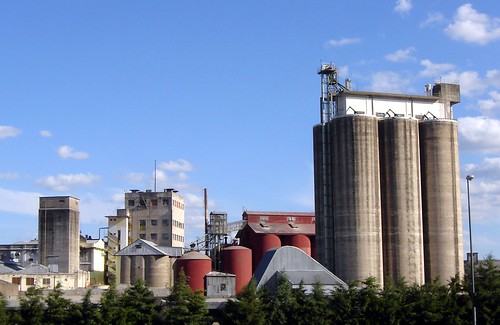
the worst part about this is beef packers inc. is only the beginning. remember that story i wrote a couple months back? about a packing giant in the midwest called cargill? i was inspired by the nytimes article chronicling a healthy, twenty-something new york girl who's now paralyzed after eating cargill's beef at a family gathering, remember? cargill. cargill. cargill. can't forget a name like that, right? well, beef packers inc. is a subsidiary to cargill, the parent company to a sputtering empire of half-assed meat processors, catered to feeding the masses an embarrassing quality of beef product at jacked prices.


(photo via fedepo18 of cargill's rosario, argentina plant)


(via the progressive magazine of government closure
of their brazilian soy plant, amid criminal destruction
of rainforest, sold to european markets as chicken feed)

why is this not a major issue in washington? why does the media just glaze over what's slowly and gradually becoming more and more apparent about our foodstuff? that these two most recent cases of salmonella poisoning happened in arizona and new mexico, hundreds and hundreds of miles from fresno, a small city in northern california, a state larger than most of the world's countries, is wrong, is it not? how is that not self-evident? and who knows how far that beef traveled, and through how many other plants, before it made its way to fresno. remember, in that october story some of cargill's beef was coming from as far away as south america.

so slowly but surely, the truth is finding its way to the surface. but even in the cnn clip above, in no way does the interviewer press the representative from the national pork producer's council when she blatantly exposes, though unknowingly, how pathetic the inspection methods are when animals go to slaughter. a usda inspector is on the line, that's mandatory she says, her intent to strengthen the case of regulatory practices for the conglomerate pork industry, but then she says the inspector gives "basically a quick physical exam. is the pig healthy, is it not, in [the inspector's] professional judgment."

look. there it is right there. when you go to the doctor for a physical exam, would a quick up and down inspection make you feel at home with the doctor's diagnosis? so then why in the world would you eat something that goes through this very thing before it's slaughtered, processed, packaged, and shipped to your local supermarket and applebee's?

and what does this say about the usda's authority? its ability to be a force in the face of the lobbyists of these giant corporations?

i hate to draw the comparison, but how disturbing was the inspection scene in schindler's list when the men were forced to de-robe, then inspected in this very same manner by nazi physicians, which essentially decided whether or not they'd die immediately or be forced into labor until they were rendered physically unable to work any longer, and thus killed anyway. is there any difference at all?

i'm asking for someone to argue against me, because i really want to know how in the world we've allowed something like this to happen in our country. who said this was okay? and who the heck decided we were better off left in the dark?

cargill. cargill. cargill.

(and for more on healthy living, check out this awesome idea.)
Related Posts with Thumbnails